
Some dogs take life in their stride. Others startle at a dropped spoon, hang back from visitors and never quite settle. If your dog seems on edge much of the time, with no single obvious trigger, this guide is for you.
A little worry is normal. The Merck Veterinary Manual describes fear as a normal response to a real or perceived threat, and anxiety as what happens when an animal anticipates one. A nervous dog spends a lot of time anticipating.
You’re in good company. In a 2020 Finnish study of about 13,700 pet dogs, 72.5% showed at least one behavior the researchers rated as highly problematic, across traits that included noise sensitivity, fear and separation-related behavior. Fear was the second most common trait, at 29%.
Signs of a nervous dog
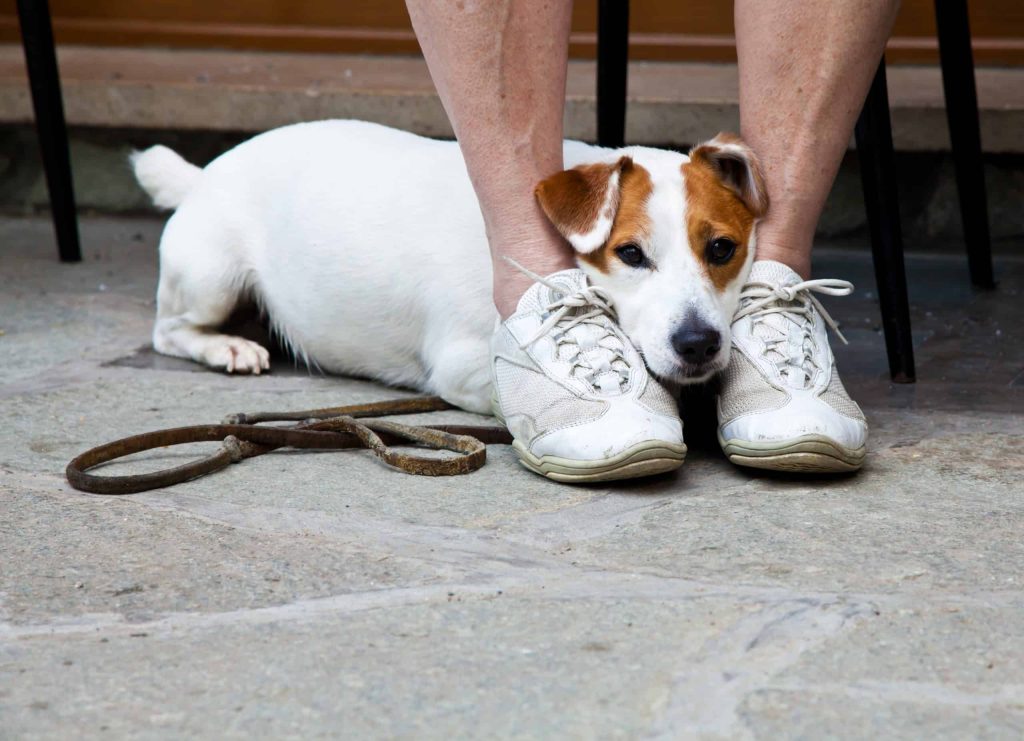
Dogs show worry with their whole body. Cornell University’s canine health center and Fear Free Happy Homes list signs like these:
- Ears pulled back or down
- A tucked tail, or a crouched body
- The whites of the eyes showing
- Lip licking and yawning
- Panting, shaking or drooling
- Whining or barking
- Licking or chewing at themselves
The quiet signs are the easiest to miss. A yawn, a lick of the lips or a sudden interest in sniffing the ground can all mean your dog is uneasy.
Growling belongs on the list too. A growl is your dog asking for space, so give it. In the Finnish study, fearful dogs were 3.2 times more likely to be aggressive than dogs who weren’t fearful.
Why some dogs are more nervous than others
Genetics. The Finnish researchers found large differences between breeds, which suggests a strong inherited element. Our article on dog breeds prone to anxiety looks at that study in more detail.
Early experiences. Fear Free Happy Homes lists poor socialization as a cause. A puppy who meets few people, places and sounds can find the world harder to handle as an adult.
Frightening events. A bad experience can leave a lasting link between a sound, a smell or a place and feeling afraid.
Pain and illness. Feeling unwell can make any dog more anxious. Cornell also notes age-related changes in the brain as a cause in older dogs.
That last one matters most if the change is recent. A dog who becomes nervous out of the blue needs a vet check before anything else.
What you can try
Build a predictable routine
Cornell’s advice starts with predictability. Meals, walks, play and training at consistent times help an anxious dog know what’s coming next. Fewer surprises means less to worry about.
Give your dog a retreat
Set up a bed or crate in a quiet part of the house and make it your dog’s own. Nobody disturbs them there, children included. It gives a nervous dog a way to step back when the house gets busy.
Notice the triggers
Keep a simple note of when your dog gets worried and what was happening at the time. Patterns show up quickly, and knowing the triggers lets you steer around them while you work on the fear.
Change how your dog feels, one step at a time
Merck says many fears and anxieties can be treated with behavior modification built on desensitization and counterconditioning. In plain terms: let your dog meet the scary thing at a distance or volume they can handle, pair it with something they love, and close the gap gradually over many sessions.
If your dog is afraid of strangers, that might mean treats while a visitor sits quietly across the room, long before anyone tries to say hello.
Teach a few easy cues
Simple cues give your dog something to do when they’re unsure. Cornell suggests a nose touch to your hand, or coming to your side on cue. It also recommends trainers who use positive reinforcement, and avoiding any who use harsh methods.
If your dog’s worry has a clear trigger, one of these guides will fit better: separation anxiety, thunderstorms, fireworks or car anxiety.
What to avoid
Don’t punish fearful behavior. It does nothing about the fear, and Merck warns that physical punishment, including prong collars and electric shock collars, can make an already aggressive dog worse.
Don’t push your dog into the thing that scares them either. Holding a frightened dog still while a stranger pets them teaches them nothing good. Gradual steps work because your dog stays calm enough to learn.
When to talk to your vet
See your vet if the nervousness is new, if it’s getting worse, or if it’s affecting your dog’s eating, sleeping or walks. See them promptly if your dog has growled, snapped or bitten.
A vet can rule out medical causes, refer you to a qualified behaviorist and prescribe medication where it’s needed. Cornell’s advice is to talk to your vet before reaching for over-the-counter supplements.
Common questions
Why is my dog nervous all of a sudden?
A sudden change can have a specific cause, such as pain, illness, a frightening event or changes that come with age. Book a vet check first.
Can a nervous dog get better?
There’s no quick fix, but there’s a lot you can do. A steady routine, step-by-step practice and help from your vet are the main tools. The aim is a dog who copes better and recovers faster, not one who never worries.
Are some breeds more nervous than others?
Yes. A 2020 Finnish study found large differences between breeds across the anxiety traits it measured. Breed is only part of the story, and any dog can be nervous.
Should I comfort my nervous dog?
Yes. Calm company helps. Stay relaxed, speak normally and let your dog come to you.
Do calming products help a nervous dog?
Some may help some dogs. Talk to your vet before trying a supplement, and use any product alongside routine and training.
Sources
- Merck Veterinary Manual: Behavior Problems in Dogs
- Salonen and others, Scientific Reports, 2020: Prevalence, comorbidity, and breed differences in canine anxiety in 13,700 Finnish pet dogs
- Cornell University Riney Canine Health Center: Anxious behavior: How to help your dog cope with unsettling situations
- Fear Free Happy Homes: Fearful Fido?