
Some dogs leap into the car. Others plant their feet at the sight of an open door, or drool and shake the whole way there. Car anxiety makes vet visits, vacations and even a trip to the park harder than they need to be.
It’s something you can work on at home, in small steps. Start by working out what’s behind it.
Signs of car anxiety in dogs
The American Kennel Club lists these signs:
- Whining
- Drooling and lip licking
- Restlessness
- Nausea
- Vomiting
Notice when the signs start. A dog who drools or whines before you’ve left the driveway is telling you the worry begins with the car itself.
Some dogs won’t get in at all. Freezing, pulling away or disappearing when the keys come out are worth noting too.
Why dogs get anxious in the car
Motion sickness
Car sickness comes from the sense of balance. The AKC explains that it’s most common in puppies, because the parts of the inner ear used for balance aren’t fully developed yet. Many dogs grow out of it. Some never do.
A dog who feels sick on every trip soon learns to dread the car, so sickness and anxiety often arrive together.
Bad associations
One frightening event, such as an accident, can be enough. So can a pattern. If the car only ever leads to the vet, your dog has good reason to be wary of it.
Telling the two apart
Timing helps. Signs that start before the car moves point to anxiety. A dog who’s fine until you’re on the road, then drools and vomits, may be dealing with motion sickness. Plenty of dogs have both, and your vet can help you untangle them.
What you can try
Rebuild the car in small steps
The AKC’s approach is to pair the car with things your dog loves, such as food, toys and games, and to move forward only when your dog is completely relaxed. A typical sequence looks like this:
- Start at a distance where your dog is calm. For a very worried dog, that may be several feet from the parked car.
- Move closer over a few sessions, then feed treats or play beside the open door.
- Sit in the back seat together with the engine off.
- Turn the engine on and stay parked.
- Drive to the end of the street and back.
- Build up to short trips that end somewhere your dog enjoys.
Don’t rush it. The AKC notes that some dogs get through the steps in one session, while others need days or weeks.
Make the ride comfortable
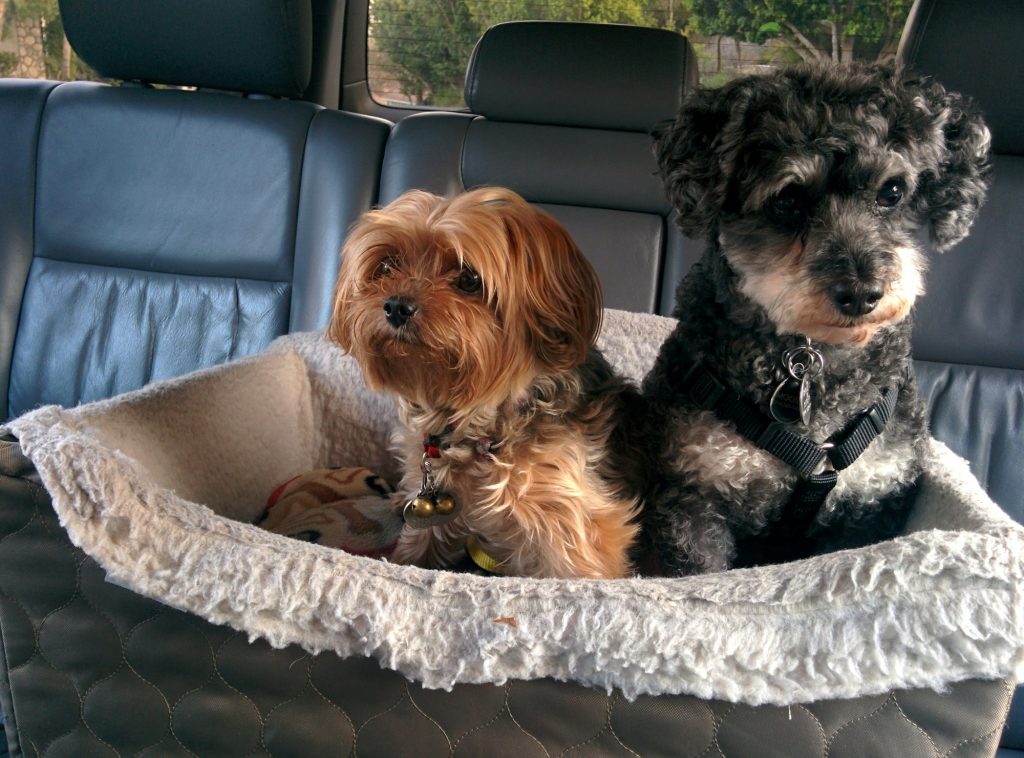
- Use a crate or a car harness attached to a seat belt. The AKC says dogs should always be safely restrained in a moving vehicle. Introduce the setup during training, before any real trips.
- Put your dog in the middle of the back seat if you can, so they’re more likely to look forward.
- Lower the windows a few inches for fresh air, and keep the car cool.
- Bring a blanket or toy that smells of home.
- Keep one special toy for car trips only.
Plan food and exercise
The AKC recommends restricting food before travel, and withholding it for 12 hours if possible, with water still available. Check that with your vet first if you have a puppy or a dog with a health condition.
A walk or a game about 20 minutes before you leave helps to burn off nervous energy.
Settle your dog somewhere new
The journey is only half of it for some dogs. A hotel room or a relative’s house is full of strange smells and sounds. Bring your dog’s own bed or blanket, keep meals and walks at their usual times, and give them a quiet corner to retreat to.
Cornell University’s canine health center recommends consistent routines for anxious dogs, and a routine is one thing you can bring with you. If your dog is uneasy in most new situations, our guide to nervous dogs goes further.
What to avoid
Don’t lift or drag a frightened dog into the car and hope they’ll get used to it. The step-by-step approach works because your dog stays relaxed enough to learn something new.
Don’t scold whining or drooling. Your dog isn’t choosing either one. And don’t let your dog ride loose, however much calmer it seems to make them.
When to talk to your vet
See your vet if your dog vomits on most trips, panics, or isn’t improving with practice. The AKC advises asking about motion sickness medication and anti-anxiety medication.
Ask before trying natural remedies as well. The AKC mentions herbs such as ginger, lavender and valerian, and anything new is worth running past your vet first.
Common questions
Is it car sickness or anxiety?
Look at when the signs begin. Drooling or whining before the car moves points to anxiety. Signs that only start on the road point to motion sickness. Many dogs have both, so ask your vet if you’re unsure.
Do puppies grow out of car sickness?
Many do. The AKC says car sickness is most common in puppies because their inner ear is still developing. Some dogs never outgrow it, and those dogs may need help from a vet.
How long does it take to get a dog used to the car?
Anything from one session to several weeks, according to the AKC. Go at your dog’s pace and only move on when they’re relaxed.
Where should my dog sit in the car?
The AKC suggests the middle of the back seat, where a dog is more likely to face forward. Use a crate or a harness attached to the seat belt.
Can I give my dog something for car anxiety?
Talk to your vet. They can advise on anti-nausea and anti-anxiety medication, and on whether a calming product such as a pheromone spray is worth trying.
Sources
- American Kennel Club: Teach Your Dog to Ride in the Car: Preventing Anxiety and Motion Sickness
- American Kennel Club: Carsickness in Dogs: What to Know
- Cornell University Riney Canine Health Center: Anxious behavior: How to help your dog cope with unsettling situations